Sincerely,
Dr. med. Nazmi Ademi
Chief Physician Section Anesthesiology and Surgery Manager
Anaesthesiology & Intensive Care Medicine
Anaesthesiology & Intensive Care Medicine
Department of Anaesthesiology & Intensive Care Medicine
Welcome to the Department of Anaesthesiology and Intensive Care Medicine.
We, an experienced team of anesthesiologists, intensive care and emergency physicians as well as anesthesia nurses, prepare and support you professionally and individually for the upcoming operation. Together with you, we select the right anaesthesia procedure and are at your side for the entire operation time.
Taking your pain is a central goal of our actions. For this purpose, we offer you the entire spectrum of modern pain therapy. Whether regional pain catheter procedures, intravenous pain pumps or pain medications specially adapted to your needs, we are there for you around the clock.
For patients who need more intensive monitoring and treatment, our intensive care unit is available. Here you will be looked after around the clock by experienced doctors and nurses who will take care of your special needs.
Our department has state-of-the-art equipment and technology as well as a high standard of safety and quality.
We want to provide you with the best possible support at every step of the treatment, so that you feel safe and well looked after for your procedure.
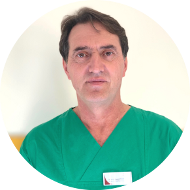

Sincerely,
Dr. med. Rolf Lamberts
Chief Physician Section Intensive Care Medicine

Specialisations:
Specialisations:
- General anesthesia (general anesthesia)
- Regional anesthesia (partial anesthesia)
- Foreign blood-saving concepts
- Interdisciplinary Intensive Care Medicine and Care
- Perioperative pain therapy
- Anaesthesia consultation
Services in the overview
Afraid of anesthesia? No more today! Our experienced team of specialists is committed and prudent in ensuring the safety and well-being of your surgery, as well as monitoring and intensive therapy for serious illnesses.
We will inform you individually in advance about the existing possibilities and alternatives, take care of you during the procedure and take care of you even after the operation in the recovery room and in the intensive care unit. We ensure that you are optimally supplied at all times.
General anesthesia or partial anesthesia? Or both? Together we will find the right anaesthesia procedure for you
Some procedures need to be performed under general anesthesia (“general anesthesia”), while for others regional anesthesia (“partial anesthesia”) may be considered as an alternative. For certain operations (e.g. knee prostheses or large abdominal procedures), we will suggest a combination of both procedures, because here a continuous, multi-day regional anesthesia via a very thin catheter serves in particular postoperative pain therapy.
Regional anaesthesia procedures work by blocking peripheral or spinal nerves or nerve strands using local anaesthetics. For safety reasons, according to current teaching, these procedures may only be performed on the patient who is awake. However, since we basically perform a local anesthesia of the skin before we gain access to the nerve strands with the usually slightly thicker cannulas, these procedures are usually not associated with pain.
In order to improve accuracy in regional procedures, we have also been using ultrasound technology for some time now to visualize both the position of the nerves and the needle guidance. Basically, general and regional anaesthesia differ only insignificantly in terms of their (extremely low) risks, so that we are happy to take your wishes into account, if this is medically justifiable.
Further interesting information on anesthesia can be found at the Website of the Professional Association of German Anesthesiologists.
In the treatment of postoperative pain, differentiated therapy concepts (so-called standard operating procedures or SOPs) are used in our company. These
- are individually tailored to the needs of the patient
- set up according to the respective operation
- have the goal of reducing your pain to a level that is tolerable for you
For procedures that are known to be associated with severe postoperative pain, we use handy electronic pump systems with which you can administer painkillers yourself via the infusion or a previously placed pain catheter via a pressure switch. Appropriate programming ensures that overdoses do not occur. Your anesthesiologist will recommend this method to you in the preliminary interview if they
It makes medical sense.
Our interdisciplinary intensive care unit offers comprehensive care for patients who have undergone a particularly serious procedure or suffer from a pre-existing condition that requires intensive care. Under the direction of the Department of Anaesthesiology and Intensive Care Medicine, our highly qualified doctors and nurses work in close coordination with the professionals responsible for your underlying condition to ensure that you receive the best possible diagnostic and therapeutic care in such a situation.
Our intensive care unit has eight beds in single rooms. Using state-of-the-art equipment, we ensure that the majority of treatment steps (with the exception of special X-ray examinations or major operations) can be carried out directly at the patient's bedside. We are particularly keen to give you a sense of security. Of course, we also take care of your pain and anxiety. In the case of necessary mechanical ventilation, this can be achieved, for example, by keeping patients under moderately deep general anesthesia for a certain period of time.
As a human being, you are the focus of our team. By supporting and stabilizing disturbed, vital organ functions, we want to give you or your relative the chance of a dignified, livable existence after hospitalization. This is the goal of modern intensive therapy. In this context, the respect of your expressed will or documented in a patient order is a matter of course for us.
At the same time as your surgery appointment, you will receive an appointment in our anesthesia consultation in the central patient reception on the ground floor. Here we discuss with you (and gladly also a relative) in detail and in peace
- their medical history
- the possible forms of anesthesia
- Risks and side effects
- necessary preliminary examinations
- Pain therapy and, if necessary, intensive medical follow-up treatment
You are welcome to contact us with all questions on this topic, but also with your fears and worries in this regard. You do not need to appear sober at this appointment! We would also like to ask you to bring information about your home medication to this appointment.
If you are in possession of doctor's letters, in particular on pre-existing internal medical conditions, please submit them to us, as well as any certificates of problems related to previous anesthesia. Please note that in the case of outpatient operations with anesthesia, collection and subsequent home care must be guaranteed.
AVAILABILITY INVESTIGATIONS
For all active divers or those who want to become one, the regular check of their own health, fitness level and the basic physical requirement for diving is necessary.
Through these two to three annual checks, the risk of suffering health damage from diving is reduced to a minimum. Reliable diving schools require an up-to-date diving fitness assessment (TTU) in order to participate in diving training or dives.
So that the diving holiday becomes a truly carefree experience and the highlight of the year, the Society for Diving and Overpressure Medicine recommends the TTUs according to a standardized examination plan.
In addition to the detailed anamnesis survey, tests on lung function, an ECG and, from the age of 40, a stress ECG are carried out in order to provide the conditions for immersion in the fascinating underwater world.
The certificate, which is valid for two or three years, is recognised worldwide.
REGISTRATION FOR INVESTIGATION
If you would like to have your diving suitability examined and certified with us, you are welcome to contact us via telephones or e-mail to markus.luethgens@kreisklinik-gg.de or innere@kreisklinik-gg.de Register with us. We will arrange an individual appointment with you, on which we will carry out the examinations, conduct the medical interview and at the end of which you will receive your certificate after approval for diving.
Here you will find the questionnaires for the health check, which you must complete and bring with you for the examination.
Our team
Here we would like to introduce you to our friendly team of doctors. Our average professional experience in anesthesia and intensive care is over 25 years!

Dr. med. Nazmi Ademi
Chief Physician Section Anesthesiology and Surgery Manager

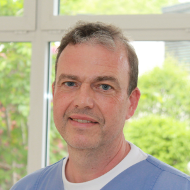
Dr. med. Markus Lüthgens
Chief Physician / Chief Physician Representative
Dr. med. Rolf Lamberts
Chief Physician Section Intensive Care Medicine


Dr. med. Christof Massing
Senior physician anesthesiology
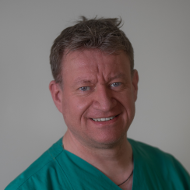
Dr. med. Alexander Kemper-Beran
Senior physician anesthesiology
Mohamed Khalil Khadhar
Senior physician anesthesiology
Mohamed Helwa
Senior physician anesthesiology
Dr. med. Andreas Angrès
Specialist in Anaesthesiology and Intensive Care Medicine
Stefan Huth
Specialist in Anaesthesiology and Intensive Care Medicine
Boyko Boev
Specialist in Anaesthesiology and Intensive Care Medicine
Dr. med. Ursula Stuckert
Specialist in Anaesthesiology and Intensive Care Medicine
Dr. med. Isabel Stang
Specialist in Anaesthesiology and Intensive Care Medicine
Dr. med. Simone shower
Specialist in Anaesthesiology and Intensive Care Medicine
Saqib Cheema
Assistant physician anesthesiology
Trajche Vasev
Assistant physician anesthesiology
Thomas Berck
Head of Anesthesia and Intensive Care
Silke cone
stellv. Head of Anesthesia and Intensive Care
Muje Elezaj
stellv. Head of Intensive Care

contacts
Secretariat Anesthesiology & Intensive Care Medicine:
06152 986-2352
06152 986-2352